NOW Unaffiliated with any other group, the Scotland-UN Committee is reconstituted, with the approval of a remaining member of the original Scotland-UN committee and in 2026 has already sent in fresh cases to the UN C-24 Committee in February of 2026 and the C4 Committee in July of 2026. This is only the first two cases. The fight for Scotland goes on. Unaffiliated with any other group, the Scotland-UN Committee is reconstituted, with the approval of a remaining member of the original Scotland-UN committee and in 2026 has already sent in fresh cases to the UN C-24 Committee in February of 2026 and the C4 Committee in July of 2026. This is only the first two cases. The fight for Scotland goes on.
Scottish Highlands at dusk with thistles in the foreground
July 1979 – 2007 · Reconstituted 2026 · Edinburgh — New York — Strasbourg

The Scotland–UN
Committee

When Westminster tore up Scotland's referendum decision, a small committee of Scots carried their nation's claim for self-determination to the United Nations, the Council of Europe, and the governments of the world. Twenty years later a Parliament sat again in Edinburgh — and in 2026 the Committee returned to the fight.

0+
Scots who signed the petition authorising S-UN's diplomatic action
0
Formal attempts to recall Scotland's Parliament blocked at Westminster
0M
Signatories to the 1950 National Covenant — refused by London
0
Fresh UN cases lodged in 2026 — C-24 in February, C4 in July. Only the first two.
Scroll
totally unconstitutional, null and void— on the 1979 "repeal" There can be no internationalism without nationalism— Vienna Memorandum, 1993 a consistent pattern of gross and reliably attested violations of human rights— UN submission, 1979 all peoples always have the right, in full freedom, to determine their political status— CSCE Vienna, 1986–89 a modern Declaration of Arbroath— the 1993 Memorandum a standing affront to democracy— the refused Covenant jeers, contempt and derision for Scotland— a century of blocked bills a damnable nuisance— Blair on devolution, 1997 the fight for Scotland goes on— the reconstituted Committee, 2026
The Story

Born of a broken promise

The Scotland-UN Committee was founded in the summer of 1979, after the 1 March referendum in which Scots voted to implement the Scotland Act — and the incoming Thatcher government forced through a so-called "repeal" in June. Its purpose was to take this "flagrantly unconstitutional action, and the Scottish case for self-determination, to the United Nations and the international authorities generally."

From a first submission to the UN Secretariat in New York in September 1979 — lodged with petition signatures of a third of a million Scots — the campaign grew into a worldwide diplomatic effort: the UN Commission on Human Rights in Geneva, the EEC Parliament, the CSCE meetings in Vienna, Paris, Copenhagen, Moscow and Helsinki, the UN World Conference on Human Rights, and every national government on earth. The Committee remained active until 2007, "its mission accomplished" — and was reconstituted in 2026 to carry the case once more.

UN · New York UN Commission on Human Rights · Geneva Council of Europe · Strasbourg CSCE / OSCE EEC Parliament US Congress & the White House UN C-24 · 2026 C4 Committee · 2026
a consistent pattern of gross and reliably attested violations of human rights — The Scotland-UN submission to the United Nations, 1979

JMJohn J.G. McGillS-UN Secretary, FSA Scot — sent the 1993 Memorandum to 32 foreign ministries; author of the tribute to Willie McRae and the 2003 Fischler letter.
WMWillie McRaeFounder member, solicitor and orator — shot on a lonely Highland road in April 1985 in still-unexplained circumstances.
JWDr James WilkieHis 1983 Radical Scotland article laid out the Constitutional Convention's structures — and Devolution and the Labour Myth.
1200The 1,200+ Leading ScotsBy 1980, direct supporters "in leading positions in the academic, industrial, professional and administrative spheres".
A Thousand Years, and Counting

The Long Road to a Parliament

From the first written mention of the Parliament of the Kingdom of Scots to the reconstituted Committee's fresh cases of 2026 — the milestones carried to the world.

1174

A Parliament of Venerable Antiquity

The Parliament of the Kingdom of Scots appears in written records under King William the Lion — "Dunc tint li reis Willame sun plenier parlament" — an institution that would assert the Community of the Realm against Crown and foreign aggression for centuries.

1707

Union & Abeyance

On 1 May the Union takes effect and Scotland's Parliament goes into abeyance. The Committee argued the transfer of "absolute sovereignty" rested on the erroneous assumption that the new UK legislature was simply the English Parliament continuing. Four armed uprisings follow within half a century.

1853

The Vindication of Scottish Rights

The National Association for the Vindication of Scottish Rights is founded with cross-party support. A Glasgow meeting of 5,000 people demands a separate Scottish Assembly.

1886

Home Rule Movement

The Scottish Home Rule Association is founded. For the next century, demand for the recall of Scotland's legislature is constant and increasing.

1889–1979

The Blocked Bills

Formal measures to recall Scotland's legislature are introduced at Westminster — "at least 24" by the 1980 Strasbourg Memorandum's count, "no fewer than 32" by the Petition to the Queen's, 34 in later retrospectives. Four motions accepting the principle were adopted by the Commons and ignored; the rest were talked out, chicaned, or voted down "in an atmosphere of jeers, contempt and derision for Scotland".

1950

The Refused Covenant

A National Covenant for a domestic legislature is signed by almost 2.5 million Scottish electors. The government in London refuses even to accept the signature sheets. They remain undelivered to this day.

1979

The Referendum & the "Repeal"

On 1 March Scots vote to implement the Scotland Act — adopted "by a clear and adequate majority" by every precedent then in force. In June the incoming government forces through a so-called repeal — "totally unconstitutional, null and void". A wave of boiling anger spreads across the country.

1979

The Committee Is Founded

A group of Scots resolves to take the case to the world. An initial submission is made to the United Nations in New York with most of the third of a million petition signatures; a Blue Paper proposes a Constitutional Convention to every Scottish local authority.

1980

Strasbourg, Geneva & the Queen

The 1980 Memorandum destroys the British delegation's claim at the Council of Europe that there is "no desire" for self-government in the UK — the Secretary General circulates it to every member government. The case is accepted by the UN Commission on Human Rights, and a Petition to the Queen is left unanswered.

1981

The Stone of Destiny at the UN

A submission on the Stone brings a United Nations committee in Paris openly onto Scotland's side, creates uproar for weeks on the Glasgow Herald's letters page, and stokes international pressure for the Stone's return.

1981

The Royal High School Affair

On 16 October, a team led by Jim Sillars enters the Calton Hill building adapted for the promised Assembly and holds a parliamentary debate. Charged with breaking and entering, they are defended with S-UN's constitutional case; the appeal court under Lord Wheatley declares it has no power to decide the "repeal"'s validity.

1983

Blueprint for a Convention

James Wilkie's article "A Scottish Constitutional Convention: the door to the future" in Radical Scotland (Dec 83/Jan 84) sets out the structures and procedures the Convention will later follow. The phrase "Claim of Right" passes into the movement's vocabulary.

1985

Willie McRae

Founder member Willie McRae is shot on 6 April on a lonely Highland road, dying the next day in still-unexplained circumstances — a loss mourned across the movement.

1986–89

CSCE Vienna

S-UN's "saturation bombing" of member states contributes to the CSCE's emphatic support for self-determination at its Third Follow-up Conference: "all peoples always have the right, in full freedom, to determine… their internal and external political status" — a milestone to this day.

1989

The World Changes

The Iron Curtain falls, attended by a Scotland-UN representative. The emphasis shifts from the UN to the new European "political architecture" — a judgement that would prove decisive.

1992

The Vigil Begins

After the fourth Conservative election victory, a candlelit vigil for a Scottish Parliament is pitched on Calton Hill. It will burn for 1,980 days, until 11 September 1997 — "the perfect kind of proof of public opinion" in diplomatic circles.

1993

Vienna, Twice

In June, at the UN World Conference on Human Rights, an S-UN representative circulates the Scottish case among 10,000+ participants. In October, the Summit Memorandum — "a modern Declaration of Arbroath" — is sent by Secretary John McGill to the foreign ministries of all 32 Council of Europe member states and the East European candidates.

1996

The Examination

The Council of Europe begins examining the UK's democratic system in June 1996. Its damning verdict gives S-UN a two-edged sword: the UK must fall into line with international democratic standards, or face the same sanctions as the East European states.

1997

The Pincer Closes

Devolution heads Blair's legislative programme — a situation he called "a damnable nuisance". S-UN campaigns in the streets for Yes; the shattering size of the majority puts restoration beyond question.

1999

A Parliament Comes Home

The Scottish Parliament and Government are restored in July — "the historic conclusion of its work".

2003

Still Watching

With London's "Sewel motions" clawing back devolved powers, S-UN remains Scotland's eyes and ears abroad — not least on fishing, where John McGill's blistering letter to EU Fisheries Commissioner Franz Fischler demands a remedy for devastating damage.

2007

The Committee Bows Out

Formally wound up in mid-2007 after 28 years, its mission accomplished — "the one and only Scottish home-rule institution in 300 years to have concrete results to show for its efforts".

2026

Reconstituted — The Fight Goes On

Unaffiliated with any other group, and with the approval of a remaining member of the original Committee, S-UN is reconstituted. Fresh cases go to the UN C-24 Committee in February and the C4 Committee in July — "this is only the first two cases".

Primary Submissions

The Documents That Travelled the World

Four landmark texts from the Committee's archive — each a step in the case carried from Edinburgh to New York, Geneva, Strasbourg and Vienna. Every card links to the original where it survives online.

1980 Ref · S-UN / Queen

A Petition to Her Grace Queen Elizabeth

Presented in the name of approximately one third of a million Scots, asking the Head of State — "subordinate to the people" — to rectify the unconstitutional government of Scotland. It remains unanswered to this day.

This is described as "democracy". It would be more accurate to describe it as blatant political repression on racist lines.
Read the original ↗
1980 Ref · S-UN / CoE

Memorandum to the Council of Europe

After the British delegation — "to all intents and purposes an English one" — secured the UK's exclusion from proposals for regional government, S-UN's memorandum exposed the claim of "no desire" for decentralisation as false. The CoE Secretary General circulated it to every member government.

…they deliberately and with malice aforethought misled the conference by ignoring a mass of evidence to the contrary.
Read the original ↗
99pp Ref · S-UN / CHR

Scotland's Claim of Right to Self-Determination

The 99-page dossier compiled by an expert committee, sent to the UN Commission on Human Rights in Geneva and circulated to every national government in the world individually — still in the bright blue file it travelled in.

The grounds are that the record constitutes racial discrimination, and that all possibility of a domestic remedy has now been exhausted.
View in the archive ↗
1993 Ref · S-UN / Vienna

Memorandum to the Heads of State & Government

Drafted as "a modern Declaration of Arbroath" in the light of the known Summit agenda, and sent to the foreign ministries of all 32 Council of Europe member states plus the East European candidates. It called for a mechanism to monitor democratic standards within member states — and became the decisive breakthrough.

There can be no internationalism without nationalism.
Read the original ↗
The Grievances

The Case Against Westminster

The Committee's submissions documented a century of what they called political repression — and set out, point by point, why the 1979 "repeal" could not stand.

The Rigged 40% Rule

The 1979 referendum required Yes votes from 40% of the entire electorate — a rule applied to no other UK constitutional referendum. In 1975, just 35% of the electorate sufficed to approve entry to the EEC. The rule had been pushed through the Commons by only 27% of MPs, "almost exclusively English".

The Unconstitutional "Repeal"

In June 1979 the incoming government overturned a decision taken by the constitutionally supreme Scottish people. The Committee's view: a subordinate authority cannot overturn the decision of its superior — the repeal was "totally unconstitutional, null and void".

A Century of Blocked Bills

Formal measures to recall Scotland's legislature were talked out, killed by procedural chicanery, or voted down by the English majority — "in an atmosphere of jeers, contempt and derision for Scotland". Scottish MPs had backed them by 80–90%.

The Refused Covenant

In 1950–51 almost 2.5 million Scottish electors signed a National Covenant for a domestic legislature. The government refused even to accept the signature sheets. They remain undelivered — "a standing affront to democracy".

The Assault on Culture

Scottish school broadcasts abolished against the opposition of "every single social group in the country"; universities, media and administration "flooded with English personnel, to the exclusion of qualified Scots".

Personal Repression

Against those suspected of favouring self-government: telephone tapping, deprivation of livelihood, campaigns of character assassination — and the still-unexplained death of founder member Willie McRae in April 1985.

Interactive Evidence

Exhibit List — the Petition to the Queen, Points A1–B5

Open each exhibit to read the evidence as the Committee laid it before the Head of State in 1980.

A1A century of popular demand
1853: the National Association for the Vindication of Scottish Rights, cross-party, with local authorities and the Convention of Royal Burghs; a Glasgow meeting of 5,000 asks for a separate Scottish Assembly. 1886: the Scottish Home Rule Association is founded. "Constant and increasing demand" for a century.
A2Thirty-two formal attempts
Every 20th-century measure backed by 80–90% of Scottish MPs (only the 1889 bill was opposed, 22–19). All were talked out by filibuster, killed by procedural chicanery, or voted down by the huge English majority "in an atmosphere of jeers, contempt and derision".
A323 to 1 in the country
Early-1930s newspaper surveys revealed a 23-to-1 majority of Scots in favour of recalling the Scottish Parliament. This pattern has never varied right up to the present day, the most recent opinion polls indicating that over 80 per cent of Scottish residents are in favour of having their own legislature once again.
A4The refused Covenant
1950–51: almost 2.5 million electors sign a National Covenant. A delegation of prominent Scots takes it to London; the government refuses even to accept the signature sheets — "a complete disregard of standards of common courtesy let alone democratic sense".
B1The subordinate cannot overrule the supreme
The referendum decision by "the country's supreme constitutional authority" became the law of the land, beyond reversal by Government, Parliament or Head of State. Neither Scots nor English law delegates any such overturning power to a legislature.
B2Rules must be set in advance
A general percentage rule for all constitutional referendums, approved by the people and laid down well in advance, would be fair. This was not done for the Scotland Act — "the stipulation therefore falls down on this account".
B3Passed by 27% of MPs
The 40% rule — "a constitutional change of a quite unprecedented nature" — was pushed through on a tiny majority supported by a mere 27% of all MPs, almost exclusively English, against the Scottish elected representatives on an exclusively Scottish measure.
B4Dead men voting
Register anomalies "made a farce out of the stipulation": dead men counted as voting against the Act, double-registered voters with two No votes (or one Yes and one No), and criminal falsification of the register by a Conservative Party officebearer.
B5No precedent anywhere
No such rule for the Northern Ireland constitution or EEC membership referendums — nor at any other point in Scottish, English or British constitutional history. In 1975, 35% of the electorate sufficed to approve subordinating the Union and Scots law to the Treaty of Rome.
Beyond the Memoranda

Audacious Operations

The Committee worked "in the rarefied atmosphere of international diplomacy at the highest level" — and was not above a little political theatre at home.

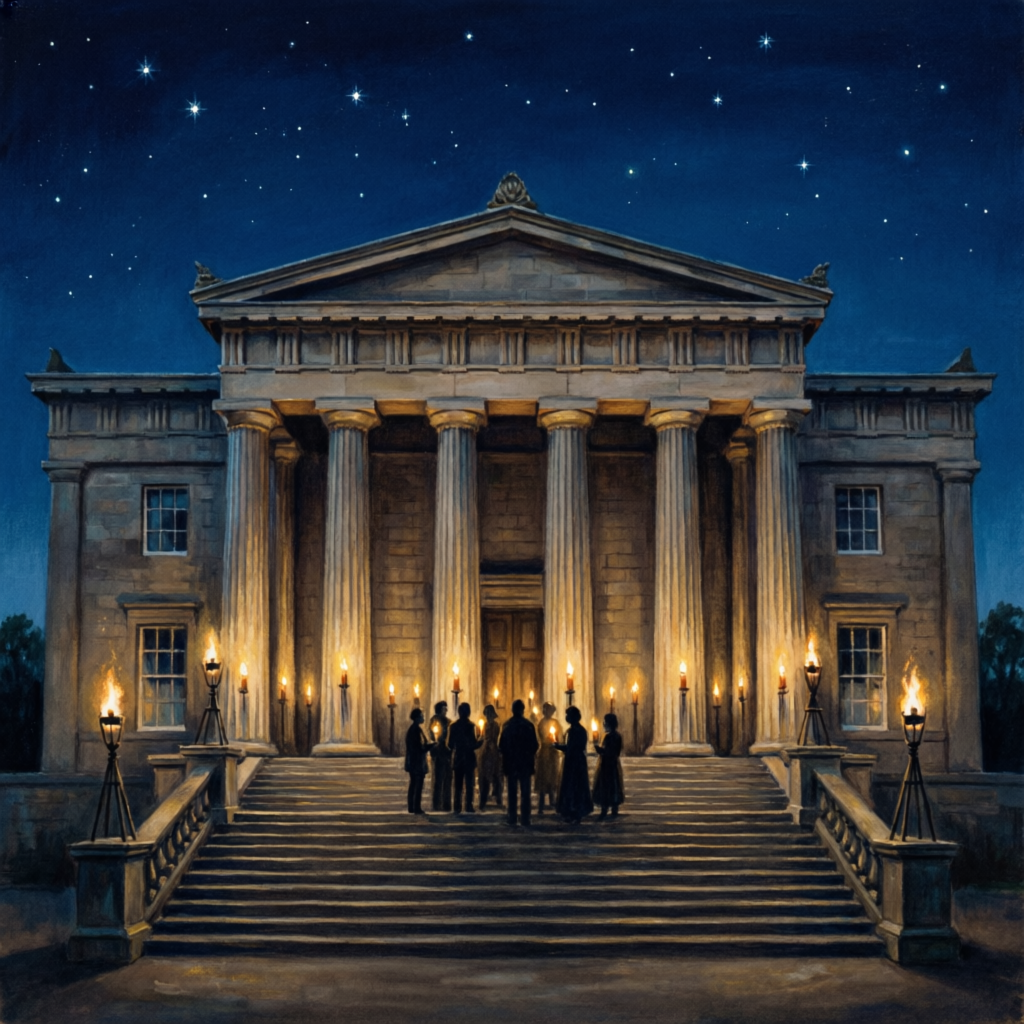
Candlelit figures on the steps of the Old Royal High School, Calton Hill, at night
The old Royal High School on Calton Hill — adapted for the Assembly that 1979 promised, and the stage for the Vigil's 1,980 days.
Operation · 01

The Stone of Destiny at the UN

Spring 1981: a submission on the Stone brings a United Nations committee in Paris openly onto Scotland's side, provokes weeks of uproar on the Glasgow Herald's letters page, and stokes international pressure for the Stone's return. "The short- and medium-term success of this enterprise took the Committee's breath away."

Operation · 02

The Royal High School Affair

16 October 1981: a team led by Jim Sillars enters the building prepared for the promised Assembly and holds a parliamentary debate. Charged with breaking and entering, the team is defended with S-UN's constitutional case — leaving the appeal court to declare it had no power to decide whether the "repeal" was valid.

Operation · 03

Proof of Public Opinion

The Vigil for Democracy on Calton Hill — a candlelit witness that ran 1,980 days from 1992 to 1997 — made "a significant impression in international diplomatic circles": "the perfect kind of proof of public opinion that we needed."

Operation · 04

Winning Washington

The Committee "brainwashed" members of the United States Congress as well as President Ronald Reagan personally, and lodged a formal Appeal to the US Congress to Support Scotland's Cause — part of a network of correspondents from California through Scandinavia and Central Europe to the Far East.

UN Geneva — week-long conference, three S-UN speakers EEC Parliament CSCE Vienna · Paris · Copenhagen · Moscow · Helsinki UN World Conference on Human Rights, Vienna 1993
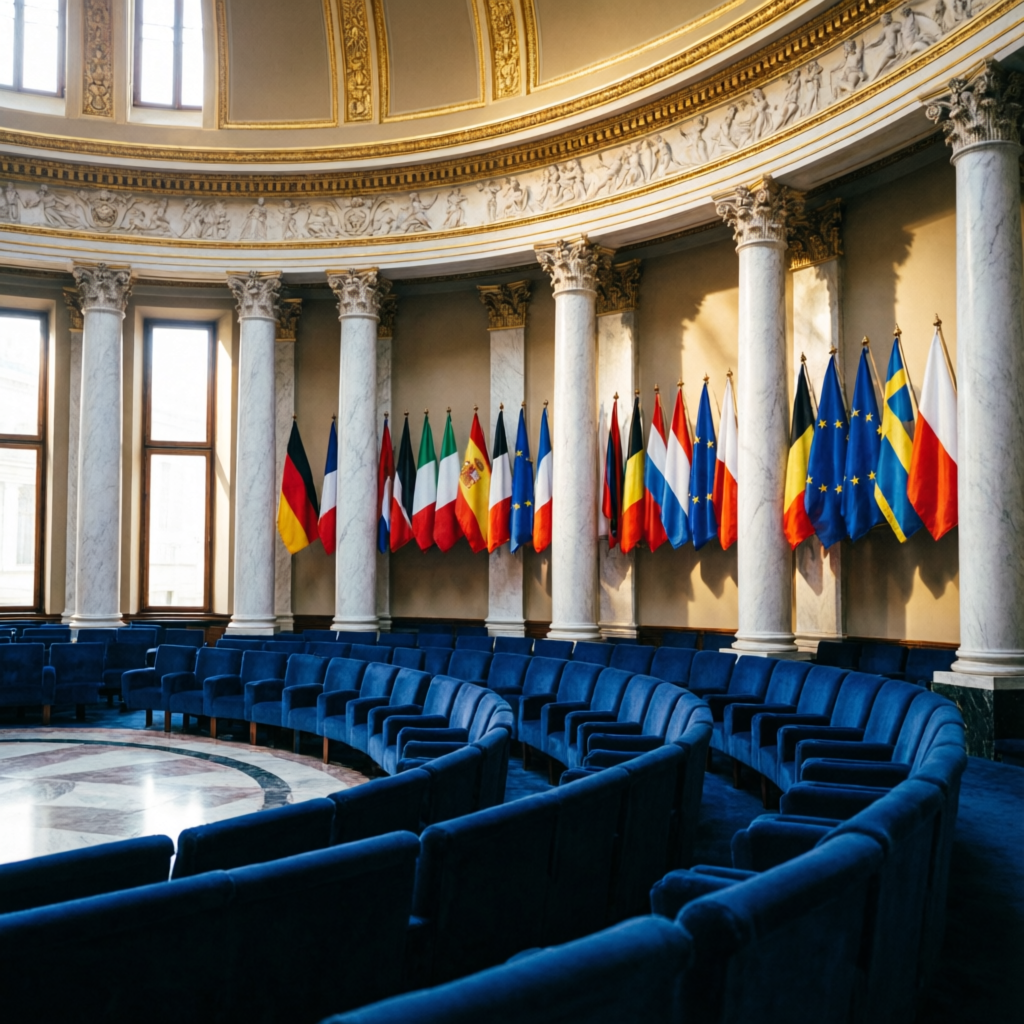
Grand European assembly hall with rows of national flags Council of Europe · Vienna 1993
The Decisive Breakthrough

A Modern Declaration of Arbroath

Armed with advance intelligence — and careful not to warn the UK delegation — Secretary John McGill sent the Memorandum to the foreign ministries of all 32 member states and the East European candidates, to bypass any attempt to suppress it. An S-UN representative sat at the Summit as observer.

Its logic was simple: if there are criteria for admission, there must be monitoring after entry, with sanctions — relegation to observer status, even expulsion. The government of Scotland by a non-elected Secretary of State failed the tests of pluralist democracy, the rule of law, and respect for human rights. In June 1996 the Council began examining the UK's democratic system; the verdict was damning, and the UK was caught in a pincer grip.

There can be no internationalism without nationalism. — Memorandum to the Heads of State and Government, Vienna Summit, 1993
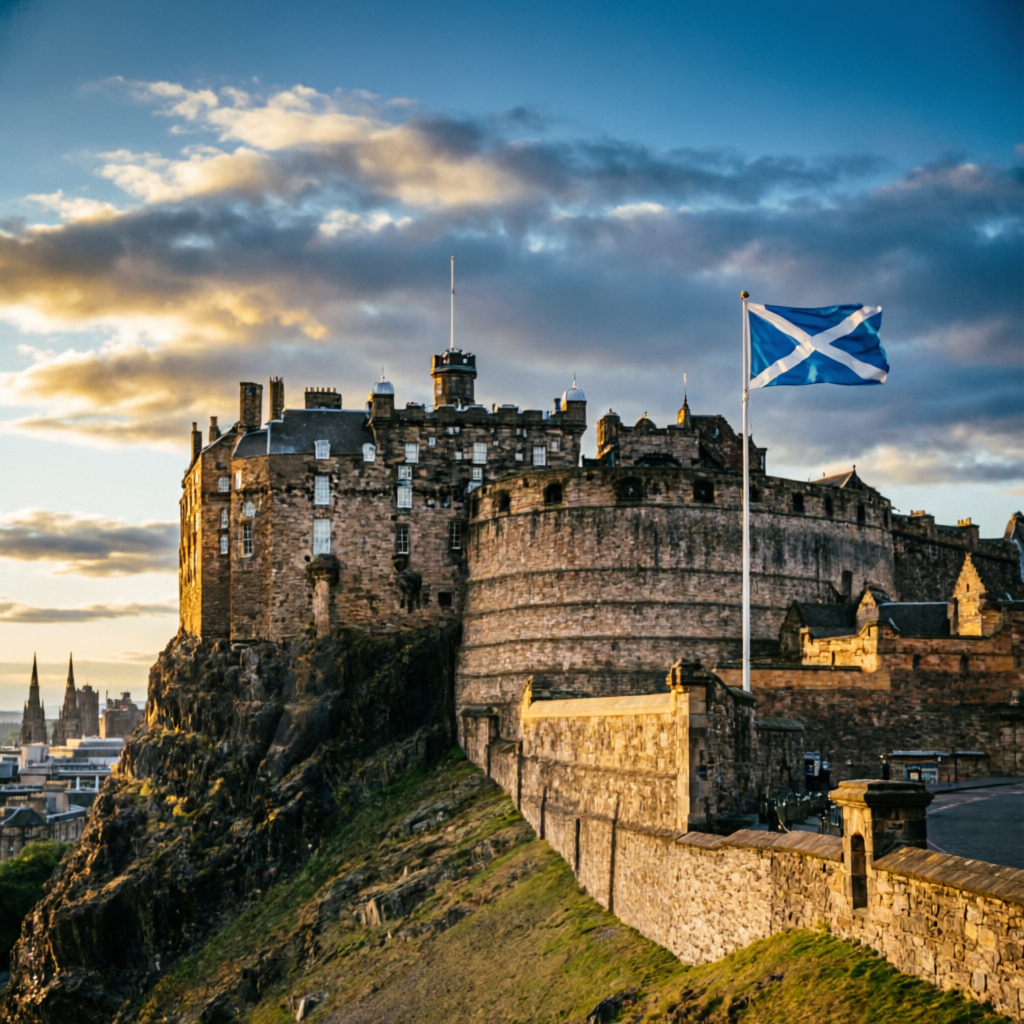
Edinburgh Castle with the Scottish Saltire flying at golden hour
The Legacy

A Parliament Comes Home

In July 1999 the Scottish Parliament and Government were restored. The Committee stayed on as "Scotland's eyes and ears abroad" until it was formally wound up in 2007. Its papers are lodged with the National Library of Scotland; the full diplomatic story awaits the release of the Foreign and Commonwealth Office and Cabinet Office records.

And in 2026, reconstituted and unaffiliated, the Committee returned to the United Nations — because, in its own words, the fight for Scotland goes on.

Scotland is one of the most ancient nations in Europe, with more than a thousand years of shared experience, during which the Scots have lived within the bounds of their present national territory. — Memorandum to the Council of Europe, 1980
Primary Sources

Explore the Archive

The Committee's own documents, preserved and hosted by ElectricScotland.com — the source texts behind this site. Every link below has been checked against the live archive. Use the filter (or press /) to find a source quickly.

Showing all 11 archive sources. Press / anywhere to jump here.

Notes on the sources

  • The Scotland-UN papers are lodged with the National Library of Scotland; a full account must await the release of the Foreign and Commonwealth Office and Cabinet Office records.
  • The count of blocked Westminster measures varies between the Committee's own documents: "at least 24" (Strasbourg Memorandum, 1980), "no fewer than 32" (Petition to the Queen), and 34 in later retrospectives.
  • Dates for the Royal High School occupation (16 October 1981) and the Calton Hill Vigil (1992–97, 1,980 days) are corroborated by independent sources, including the National Library of Scotland and the Gazetteer for Scotland.
  • The 2026 reconstitution, and the fresh cases to the UN C-24 (February 2026) and C4 (July 2026) Committees, are stated by the reconstituted Scotland-UN Committee; this site presents the Committee's own account throughout.